
My son came home from his safari-themed classroom day with orange paint on his shirt and a huge grin on his face.
In his backpack was a small paper lion, made from his own handprint. The fingers were the mane. The palm was the face. It was messy and a little crooked, and it was perfect.
A few weeks later, we made a second one together as a Father’s Day card for his grandpa. Same craft, two very different reasons to make it.
If you’re planning a zoo unit or looking for a sweet handmade gift, this lion handprint craft covers both.
5 Supplies That Make This Craft Easier
- Crayola Washable Kids Paint (6-Pack) — Washable paint keeps orange and yellow paint from turning into a permanent stain.
- Precut White Cardstock Sheets — Sturdy cardstock handles a full handprint better than thin paper, which tends to buckle when wet.
- Chubby Kid-Safe Paint Brushes — Wide handles are easy for small hands to hold steady during setup.
- Wiggle Eyes Variety Pack — A pair of glued-on eyes instantly brings the lion’s face to life.
- Baby Wipes Travel Pack — Fast cleanup means less scrubbing and more time enjoying the craft.
What Is the Lion Handprint Craft?
This craft turns one full handprint into a lion’s face, using the fingers as the mane and the palm as the center of the face. It’s built for young kids, ages two to six, and works just as well for one child at home as it does for a full classroom during a themed unit.
The process is simple. You paint a hand orange or yellow. You press it onto paper with fingers spread wide. Then you add eyes, a nose, and a mouth in the middle of the palm print to finish the face. There’s no cutting and no tricky folding involved.
Teachers like it because it fits neatly into a zoo, safari, or jungle unit. Parents like it because it turns into a meaningful gift just as easily as it works as a classroom activity.
Why This Craft Works for Both a Classroom Unit and a Father’s Day Gift
This craft earns its place on two very different lists because the shape carries two strong meanings at once. In a classroom, a lion ties directly into lessons about zoo animals, habitats, and the food chain. At home, that same lion becomes a natural stand-in for “king of the jungle,” which lines up perfectly with a Father’s Day theme.
It also works across a wide age range. A two-year-old can manage a basic hand press with help from an adult. A five- or six-year-old can spread their own fingers for the mane, pick their own paint colors, and write a short message if the craft is being turned into a card. That flexibility makes it useful whether you’re running a group activity or working one-on-one with your own child.
Materials Needed
- Washable kids’ paint (orange, yellow, or gold work well)
- White or light-colored cardstock
- A paintbrush or sponge for applying paint
- Two small wiggle eyes (or a black marker for drawing eyes)
- Glue stick or craft glue
- Baby wipes or a damp cloth
- Black or brown fine-tip marker for details
- Optional: brown paper scraps for ears, glitter glue for a shiny mane
How to Make It
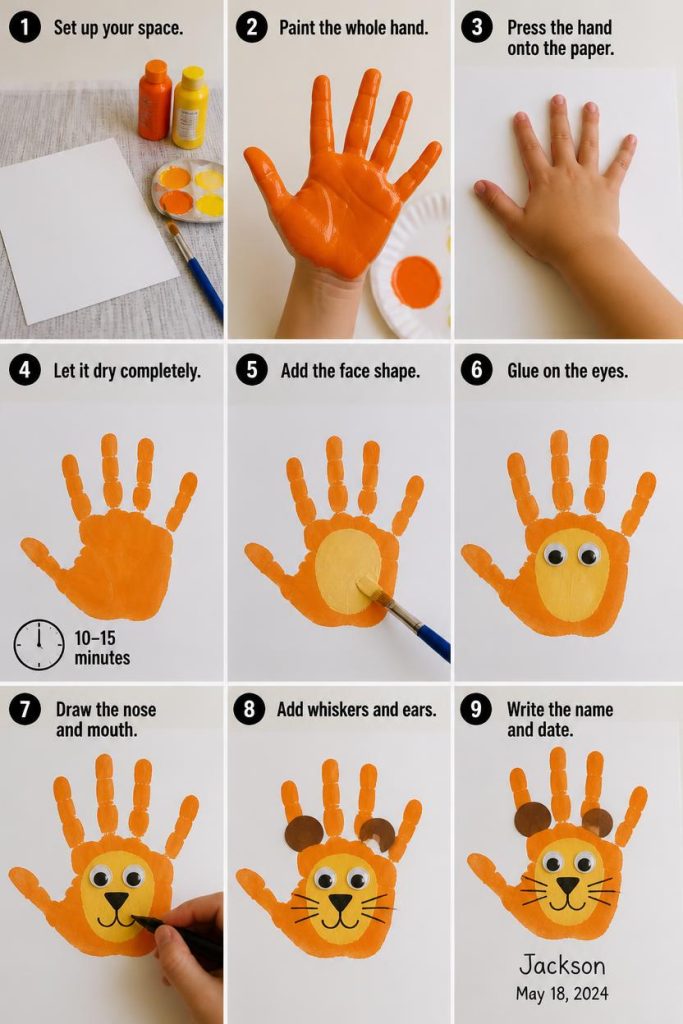
- Set up your space. Cover the table with a plastic cloth or newspaper before starting. Bright paint colors like orange and yellow show up fast on fabric and furniture.
- Paint the whole hand. Cover the palm and all five fingers with an even coat of paint. Spread the fingers apart slightly before painting so each one gets full coverage.
- Press the hand onto the paper. Spread the fingers wide, then press the whole hand firmly onto the cardstock. Lift straight up without dragging, so the mane shape stays clean.
- Let it dry completely. Give the print ten to fifteen minutes to dry before adding any face details. Wet paint smudges the moment you touch it.
- Add the face shape. Once dry, use a lighter tan or cream paint to add a small oval in the center of the palm print for the lion’s face.
- Glue on the eyes. Attach two wiggle eyes near the top of the face oval, spaced evenly apart.
- Draw the nose and mouth. Use a black marker to add a small triangle nose below the eyes, with a simple curved mouth underneath.
- Add whiskers and ears. Draw a few short whisker lines out from the nose, and glue on two small brown paper circles at the top of the mane for ears.
- Write the name and date. Add the child’s name and the date somewhere on the page. This step turns a fun craft into something worth saving for years.
Tips for a Clean Handprint
- Paint one even coat. A thick layer of paint pools between the fingers and blurs the mane shape once it’s pressed down.
- Spread the fingers before pressing, not after. Trying to fan the fingers out mid-press usually smears the print instead of shaping it.
- Keep a damp cloth close by. Bright paint colors tend to end up on faces and tables fast, so a quick wipe saves a bigger cleanup later.
- Work on a flat, hard surface. A wobbly table or soft placemat can shift under the paper during the press, which throws off the mane’s shape.
Make It a Classroom Activity
This craft works well with a small group, especially as part of a zoo or safari unit, with a little planning ahead of time.
Set up two or three paint stations. Splitting the class into smaller groups keeps the line moving and avoids long waits for paint.
Assign one adult per station. A helper applying paint and guiding the finger spread keeps the print consistent, especially for younger toddlers who need extra support.
Plan for drying space. Lay finished prints flat on a table or drying rack, and avoid stacking them until the paint is fully set.
Label before painting starts. Write each child’s name on their paper ahead of time, so nothing gets confused once several lions are drying side by side.
Tie it into the lesson. Use the activity as a chance to talk about where lions live, how they hunt, and why they’re called the king of the jungle, so the craft supports the actual unit instead of standing on its own.
Turn It Into a Father’s Day Card
This same lion handprint turns into a heartfelt Father’s Day card with just a few extra steps, making it a nice option for a dad or grandfather.
Fold the cardstock first. If you’re planning to turn this into a card, fold the paper in half before painting, then press the handprint onto the front panel only.
Lean into the “king” theme. Write a short message inside like “You’re the king of my jungle” or “Brave like you, Dad.” The lion imagery makes this connection feel natural, not forced.
Date the inside of the card. Add the date somewhere inside, so the card becomes a keepsake he can look back on as the years pass.
Add a small crown detail. Drawing or gluing a tiny paper crown above the lion’s mane adds a playful touch that ties the whole card together. A small gold marker line around the crown edge makes it feel a bit more festive without adding much extra work.
Frequently Asked Questions
What kind of paint should I use for handprint crafts? Washable kids’ paint works best. It comes off skin and most fabrics easily, and it’s made to be safe for young children to use directly on their hands.
How do I keep the handprint from smudging? Press the hand down firmly without sliding it, then lift straight up in one motion. Let the print dry fully before adding the face, whiskers, or ears on top.
How far in advance can I prep this activity? Cardstock, folded cards, and name labels can be prepped a day ahead. Paint should be set out right before the activity, since it can dry out or thicken if it sits too long.
How do I adapt this for a very young toddler’s hand? For toddlers under two, expect a smaller, less spread-out mane. Guide the fingers gently during the press, and keep the added face details simple, since a smaller print leaves less room for extra decoration.
How do I store or display the finished craft? Once the paint is fully dry, store the piece flat in a folder, or frame it right away for display. Avoid folding a flat print later, since that can crack the dried paint. A labeled folder or small memory box works well if you’re keeping several years of crafts together.
Can I do this craft with just one child at home? Yes. It works just as well with one child as it does with a full classroom. You’ll move through the steps a little faster, and you’ll have more time to add small details like the crown or a decorated background.
Can I turn this into a full jungle or safari scene? Yes. Once you’re comfortable with the basic lion, you can add handprint elephants, giraffes, or zebras around it to build a full safari scene on one page. It’s an easy way to stretch the activity into a longer project during a themed unit or a quiet afternoon at home.
This lion handprint craft is a small project that works two very different jobs well. It fits right into a zoo or safari lesson, and it turns into a gift that means something to the dad or grandfather who receives it. Whether you’re running a classroom activity or making a quiet card at the kitchen table, this is a craft that earns a spot on the fridge, or in a frame on someone’s desk.

Sohel Rana is the writer, editor, publisher, and founder of The Tidy Porch. He is the man who is responsible for the craft (my wife created) being converted into a written piece. He also helps her wife (Sumona) by capturing videos of each craft. In short, he brings each craft created by her wife in front of you by transforming it into an article and a video.
