
I tripped over a sneaker again this morning. Then a sandal. Then one lone rain boot, sitting all alone in the middle of the hallway like it owned the place.
I used to think a cute shoe rack would fix this. It didn’t. My kids walked right past it, every single time.
Here’s what I learned instead: the shoe storage that actually works isn’t the prettiest one. It’s the one your kids barely have to think about.
Below are five simple systems you can build this weekend, plus the exact products that make them work.
Top 5 Products for Kid-Friendly Shoe Storage
- RiverRidge Kids Storage Bins with Handles [Amazon link] — Low, lightweight bins kids can grab and drop shoes into without asking for help. The side handles make them easy for small hands to carry too.
- Honey Can Do Kids Storage Cubby Organizer [Amazon link] — Open cubbies at eye level for little ones, so shoes go in without a lid to fight. It’s also sturdy enough to double as a step for reaching a coat hook.
- Humble Crew Kids Toy and Shoe Storage Bench [Amazon link] — A sit-and-swap bench with bins underneath, perfect for tiny hands tying laces.
- Amazon Basics Kids Fabric Storage Organizer [Amazon link] — Soft-sided cubes that won’t hurt little toes when they get kicked around.
- Guidecraft Cubby Bin Storage Organizer [Amazon link] — A sturdy wood frame with colorful bins that turn cleanup into a matching game.
The Floor-Level Bin System That Toddlers Actually Use
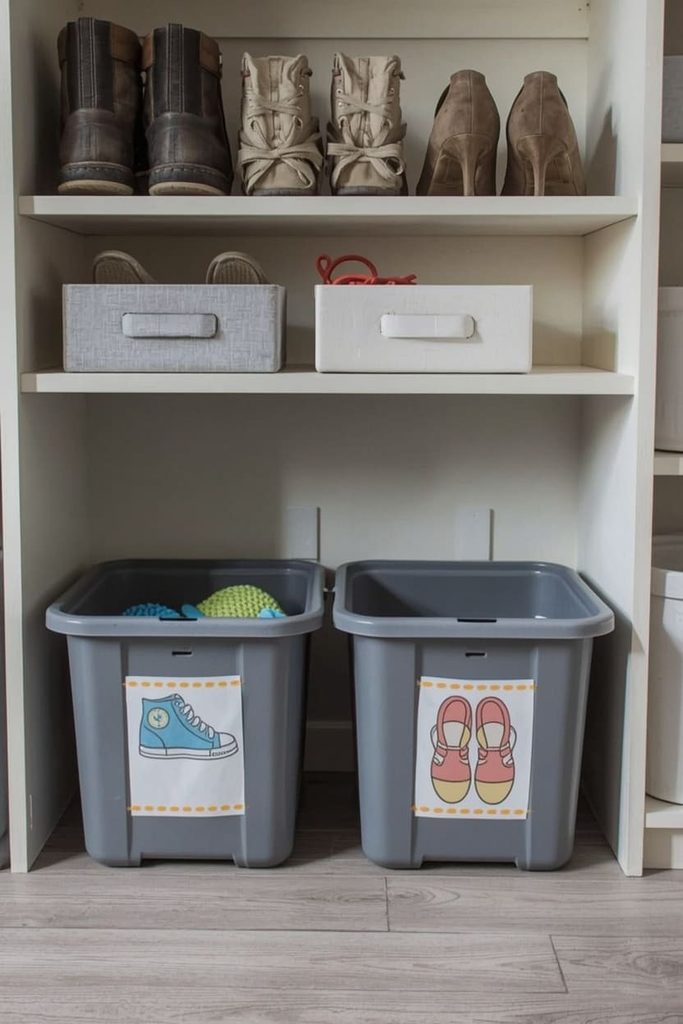
A shoe bin sitting right on the floor is the easiest system for a toddler to use.
Little kids don’t want to reach up or open anything. If a bin is low and open, they’ll use it. If it’s high or has a lid, they won’t.
Here’s how to build it:
- Pick two or three low, open bins. One per child works best.
- Set them right next to your front door, not tucked in a closet.
- Skip the lids. A lid is one extra step your toddler will skip.
- Add a picture of a shoe taped to the front of each bin, so even non-readers know exactly what goes there.
This system beats a fancy shelf because there’s nothing to figure out. Shoe comes off, shoe goes in bin. That’s the whole job.
I tried a tall shoe rack with my own toddler first. It looked great in photos. He never touched it once. The moment I swapped it for a plain bin on the floor, shoes started landing inside on their own within days. Sometimes the fix really is that simple.
Tip: Keep the bin small enough that it fills up fast. A full bin feels like a job well done to a three-year-old.
The Bench-and-Bin Combo That Turns Shoes Into a Habit
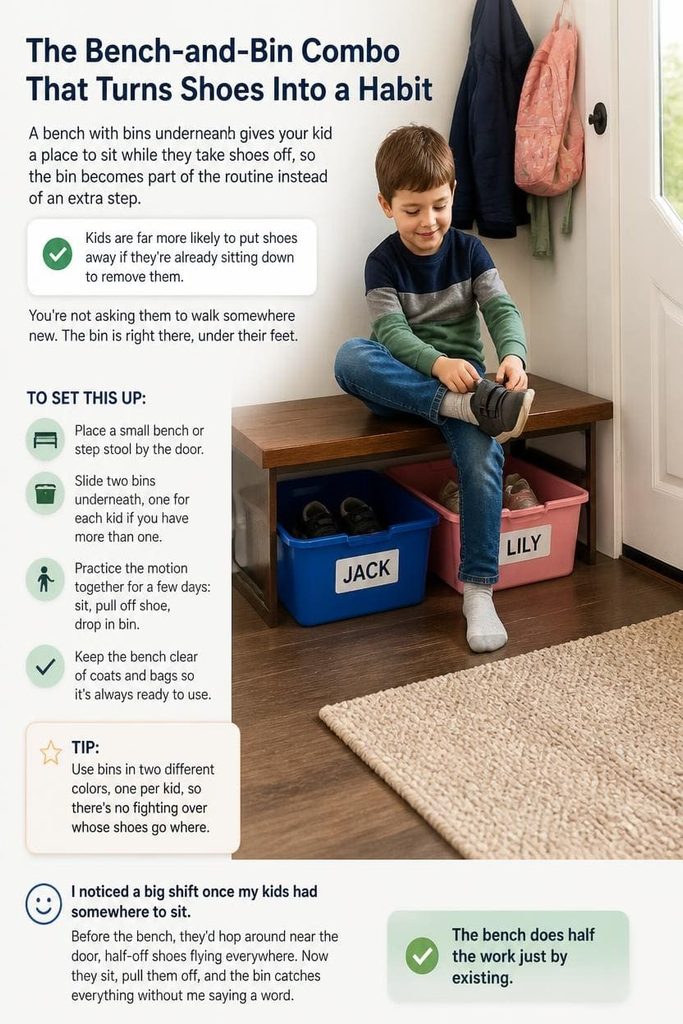
A bench with bins underneath gives your kid a place to sit while they take shoes off, so the bin becomes part of the routine instead of an extra step.
Kids are far more likely to put shoes away if they’re already sitting down to remove them. You’re not asking them to walk somewhere new. The bin is right there, under their feet.
To set this up:
- Place a small bench or step stool by the door.
- Slide two bins underneath, one for each kid if you have more than one.
- Practice the motion together for a few days: sit, pull off shoe, drop in bin.
- Keep the bench clear of coats and bags so it’s always ready to use.
Tip: Use bins in two different colors, one per kid, so there’s no fighting over whose shoes go where.
I noticed a big shift once my kids had somewhere to sit. Before the bench, they’d hop around near the door, half-off shoes flying everywhere. Now they sit, pull them off, and the bin catches everything without me saying a word. The bench does half the work just by existing.
The Wall Pocket System for Kids Who Lose Track of Pairs
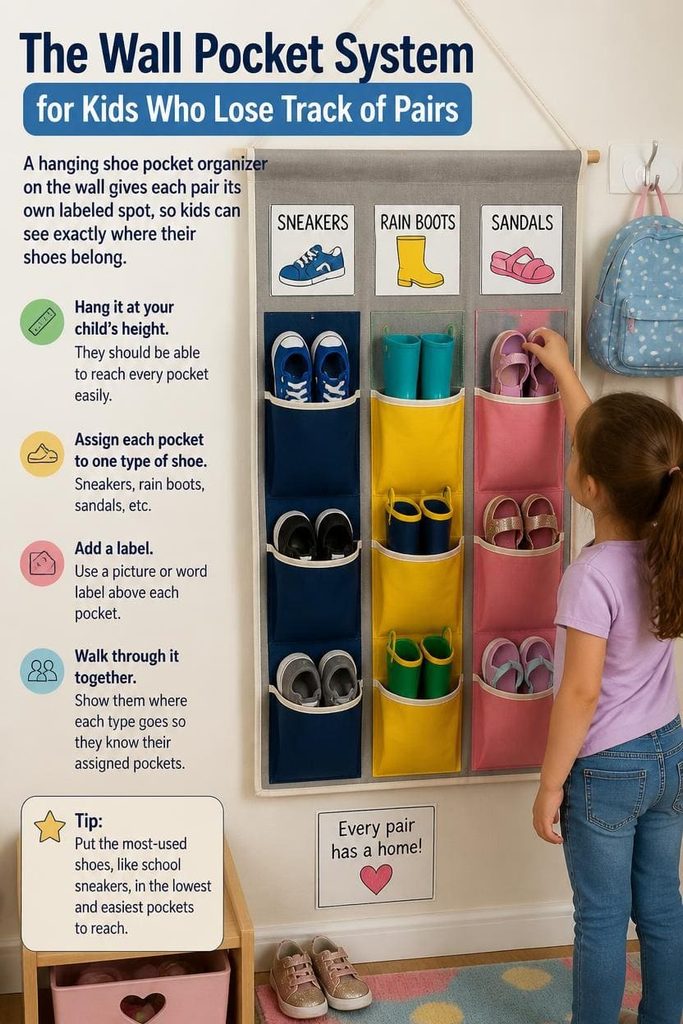
A hanging shoe pocket organizer on the wall gives each pair its own labeled spot, so kids can see exactly where their shoes belong.
Some kids don’t struggle with putting shoes away. They struggle with matching pairs or remembering which shoes are for what. A labeled pocket system solves that instantly.
Here’s the setup:
- Hang a fabric pocket organizer at your child’s height, not yours.
- Assign each pocket to one type of shoe: sneakers, rain boots, sandals.
- Add a small picture or word label above each pocket.
- Walk through it once together so they know their assigned pockets.
This works especially well for kids heading into kindergarten, since it mirrors the cubby systems they’ll see at school.
My daughter used to dump every shoe into one messy pile, then spend ten minutes hunting for a matching sandal. Once each pair had its own labeled pocket, that search disappeared. She checks her pocket first, every time, without me reminding her.
Tip: Put the most-used shoes, like school sneakers, in the lowest and easiest pockets to reach.
The Rotating Basket System for Families With a Lot of Shoes
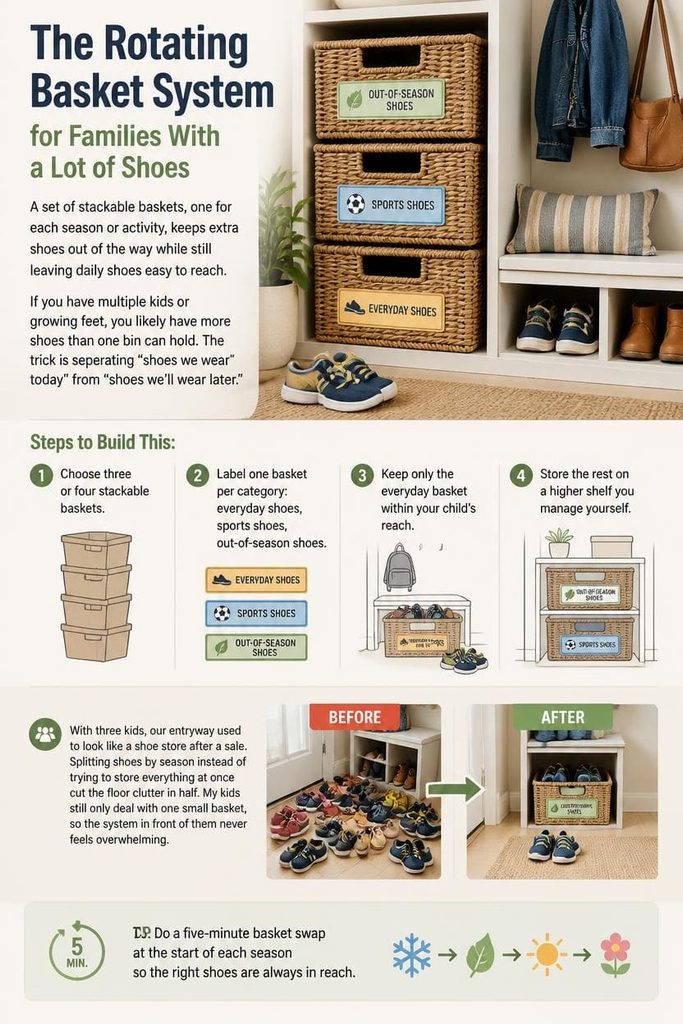
A set of stackable baskets, one for each season or activity, keeps extra shoes out of the way while still leaving daily shoes easy to reach.
If you have multiple kids or growing feet, you likely have more shoes than one bin can hold. The trick is separating “shoes we wear today” from “shoes we’ll wear later.”
Steps to build this:
- Choose three or four stackable baskets.
- Label one basket per category: everyday shoes, sports shoes, out-of-season shoes.
- Keep only the everyday basket within your child’s reach.
- Store the rest on a higher shelf you manage yourself.
This keeps the floor-level system simple for your kids while still solving the bigger clutter problem for you.
With three kids, our entryway used to look like a shoe store after a sale. Splitting shoes by season instead of trying to store everything at once cut the floor clutter in half. My kids still only deal with one small basket, so the system in front of them never feels overwhelming.
Tip: Do a five-minute basket swap at the start of each season so the right shoes are always in reach.
The Labeled Cubby Wall That Grows With Your Kids
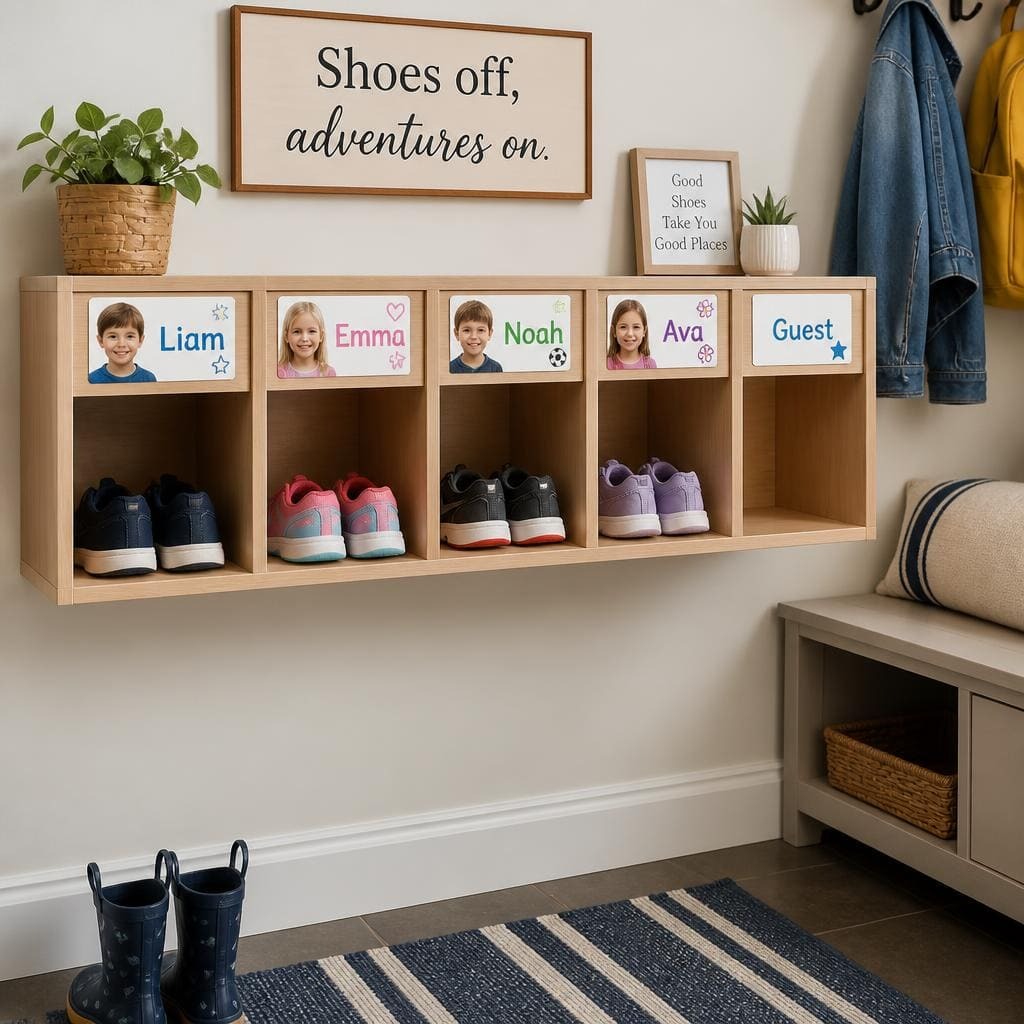
A wall-mounted cubby unit with one labeled slot per child creates a permanent “shoe home” that stays the same even as your kids grow.
Consistency matters more than style here. When the same cubby belongs to the same kid every single day, the habit sticks faster.
To build this:
- Mount a simple cubby shelf at a height your youngest child can reach.
- Assign one cubby per child using their name or photo.
- Leave one cubby empty for guests or extra pairs.
- Reinforce it daily for the first two weeks by walking your child through the motion.
Unlike a shared bin, a personal cubby removes any confusion about whose shoes belong where. That alone cuts down on a lot of morning arguments.
We added this system once our kids started school and needed more permanent spots. It also grew with them. The same cubby that held tiny toddler shoes now holds bigger sneakers, with zero changes needed. That kind of setup saves you from redoing your entryway every year.
Tip: Let your child decorate their own cubby label. Ownership makes them more likely to use it.
How to Get Kids to Actually Use Their New Shoe Storage
A new bin or cubby won’t fix the habit by itself. You still have to build the routine.
Start small. Practice the motion with your child for a full week, every time they come inside. Say the same short phrase each time, like “shoes in the bin.” Repetition builds the habit faster than reminders ever will.
Praise the small wins. A simple “nice job” when a shoe lands in the bin goes further than you’d expect. Kids respond to quick, positive feedback.
Keep the system exactly the same for at least a month. Changing bins or spots too soon resets the habit back to zero.
Involve your child in setting it up, even if it takes longer than doing it yourself. A kid who helped pick the bin or stick on the label feels some ownership over it. That small bit of ownership matters more than any organizing product on the market.
Set the routine at the same moment every day, if you can. Right after walking through the door works better than “sometime before dinner,” because kids handle clear timing far better than vague expectations.
Expect some backsliding, especially in the first two weeks. A tired kid after school is far less likely to remember the routine than a rested one in the morning. Gently walk them back to the bin instead of scolding. Consistency, not perfection, is what builds the habit long term.
Where to Put Shoe Storage So Kids Won’t Ignore It
Placement matters more than the product itself. Shoe storage only works if it sits directly in your child’s path from the door.
If a bin is even a few steps out of the way, most kids will drop their shoes right where they stand instead. Put the system between the door and wherever your child walks next, whether that’s the kitchen or the stairs.
Keep the area clear of anything else. A bin surrounded by coats, bags, and mail becomes invisible. A bin standing alone gets noticed.
Think about the actual path your child walks after coming inside, not the path you imagine they should walk. If they always run straight to the living room, put the bin along that route, even if it means moving your entryway table. Fighting the natural path never works as well as working with it.
Lighting matters too, more than most parents expect. A bin tucked in a dark corner gets skipped just because it’s easy to forget it’s there. A well-lit, open spot stays top of mind for a young kid who isn’t yet great at remembering steps.
Frequently Asked Questions
How many pairs of shoes should a shoe storage system hold for kids? Plan for two to three pairs per child within easy reach. Anything more belongs in a separate, less accessible spot.
What’s the best shoe storage for small entryways with kids? A single low bin or a slim wall pocket organizer works best in tight spaces. Both take up little floor space while staying easy for kids to use.
How do I stop my kids from leaving shoes in random spots? Move the storage closer to where they actually stop, not where you wish they would stop. Most random shoe piles happen because the bin is too far from their natural path.
Can shoe storage help with school morning routines? Yes. A consistent shoe spot means less searching and fewer meltdowns before school. Many parents notice mornings speed up within the first week.
Do labels really help younger kids? Yes, especially picture labels. Kids who can’t read yet still recognize a picture of a shoe and match it to the right spot.
What if my kids share one small entryway? Give each child a clearly separate zone, even if it’s just one bin per child sitting side by side. Shared, unlabeled space is where most shoe chaos starts, so a visible boundary between kids solves a lot of it.
Should shoe storage be inside or outside the front door? Inside works better for most families, especially in bad weather or cold climates. An outdoor system gets skipped the moment it rains, while an indoor one stays part of the daily routine no matter the forecast.
One Small Change, A Lot Less Chaos
You don’t need a perfect entryway. You need one system your kids will actually use without being asked twice. Pick the idea that fits your space, set it up this weekend, and give it two full weeks before judging how well it works.
I promise you won’t get it perfect on the first try, and that’s fine. My own entryway went through three versions before something finally stuck. What mattered wasn’t the bin, the color, or the label.
It was picking one simple system and sticking with it long enough for my kids to build the habit. Small, boring routines beat pretty shoe racks every single time.

Sohel Rana is the writer, editor, publisher, and founder of The Tidy Porch. He is the man who is responsible for the craft (my wife created) being converted into a written piece. He also helps her wife (Sumona) by capturing videos of each craft. In short, he brings each craft created by her wife in front of you by transforming it into an article and a video.
