
Our mudroom used to be a disaster zone. Four kids, two adults, and one dog meant boots, sneakers, and muddy cleats piled up by the back door every single day.
Wet coats dripped onto the floor. Nobody could find a matching pair of shoes without digging through the pile first.
I finally sat down and built a real system, one that gave every person their own spot and kept the mud contained. It took a weekend, but it changed our mornings completely, and the shoe arguments stopped almost overnight.
Here are 5 complete ideas you can follow from start to finish, plus a few products that make each one easier to build this weekend.
Top 3 Products for Mudroom Shoe Storage
Boot Tray System — This durable tray catches mud, snow, and water under boots, protecting your mudroom floor from daily damage all season long.
Locker-Style Shoe and Coat Cubby Unit — This multi-section unit gives each family member their own cubby for shoes, coats, and bags in one sturdy, wall-anchored piece.
Bench with Built-In Shoe Storage and Hooks — This bench combines seating, shoe cubbies, and coat hooks, covering three daily needs in a single durable piece built for family traffic.
A Family Locker System With a Spot for Everyone
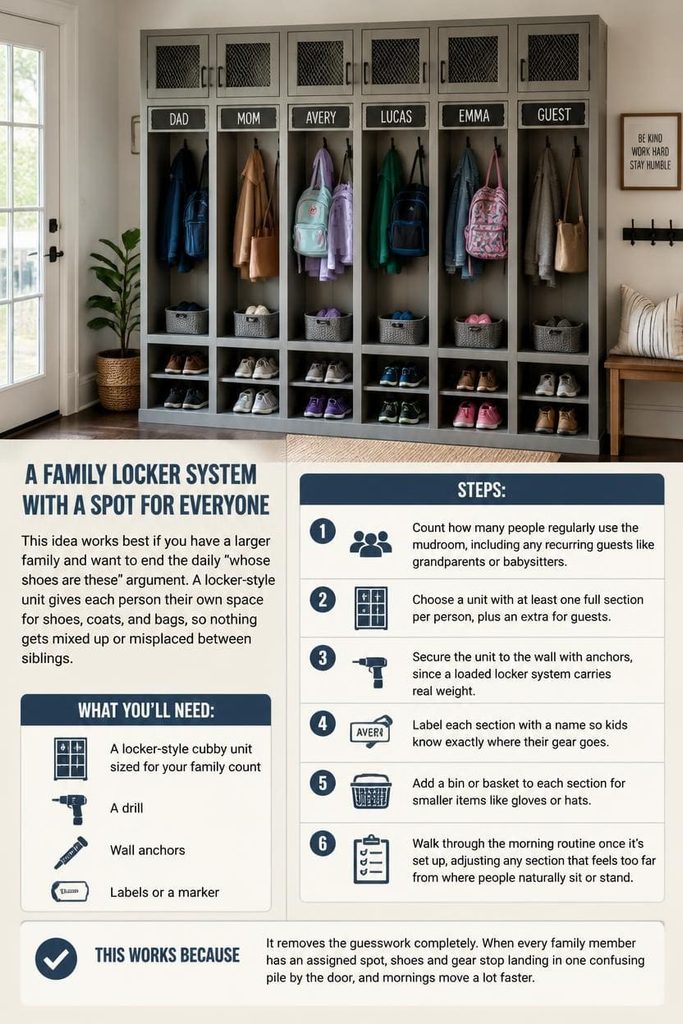
This idea works best if you have a larger family and want to end the daily “whose shoes are these” argument. A locker-style unit gives each person their own space for shoes, coats, and bags, so nothing gets mixed up or misplaced between siblings.
What you’ll need:
- A locker-style cubby unit sized for your family count
- A drill
- Wall anchors
- Labels or a marker
Steps:
- Count how many people regularly use the mudroom, including any recurring guests like grandparents or babysitters.
- Choose a unit with at least one full section per person, plus an extra for guests.
- Secure the unit to the wall with anchors, since a loaded locker system carries real weight.
- Label each section with a name so kids know exactly where their gear goes.
- Add a bin or basket to each section for smaller items like gloves or hats.
- Walk through the morning routine once it’s set up, adjusting any section that feels too far from where people naturally sit or stand.
This works because it removes the guesswork completely. When every family member has an assigned spot, shoes and gear stop landing in one confusing pile by the door, and mornings move a lot faster.
A Boot-and-Mud Zone That Protects Your Floor
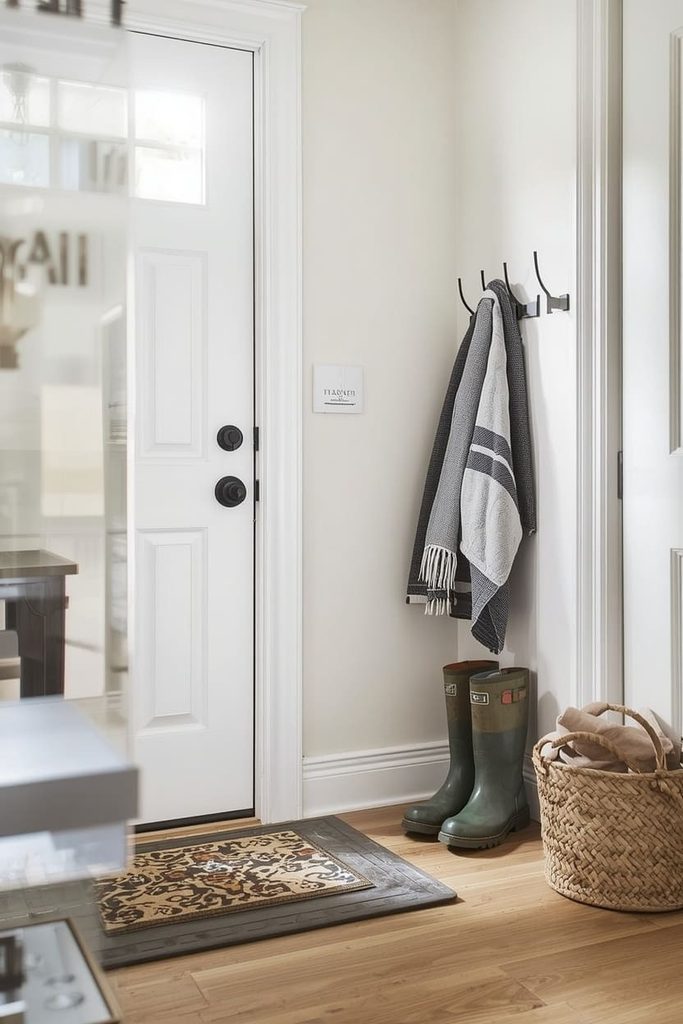
This idea suits you if your family tracks in mud, snow, or rain for a good chunk of the year. A dedicated boot-and-mud zone contains the mess before it spreads into the rest of the house, saving you from constant floor cleanup.
What you’ll need:
- A large boot tray or rubber mat
- A stiff outdoor doormat
- A small brush or boot scraper
Steps:
- Place a boot scraper or stiff mat right outside the mudroom door for the first pass at removing mud.
- Set a boot tray or rubber mat just inside the door, sized to fit your whole family’s boots at once.
- Keep a small brush nearby for knocking off dried mud before boots go on the tray.
- Empty and rinse the tray weekly, more often during wet seasons.
- Add a small towel hook nearby for wiping down wet boots quickly.
- Keep a spare mat on hand so you can swap one in while the other dries or gets cleaned.
This works because it stops mud and water at the door, protecting your floors and keeping the mess contained to one easy-to-clean spot instead of tracked through the whole house.
A Built-In Bench With Storage Underneath
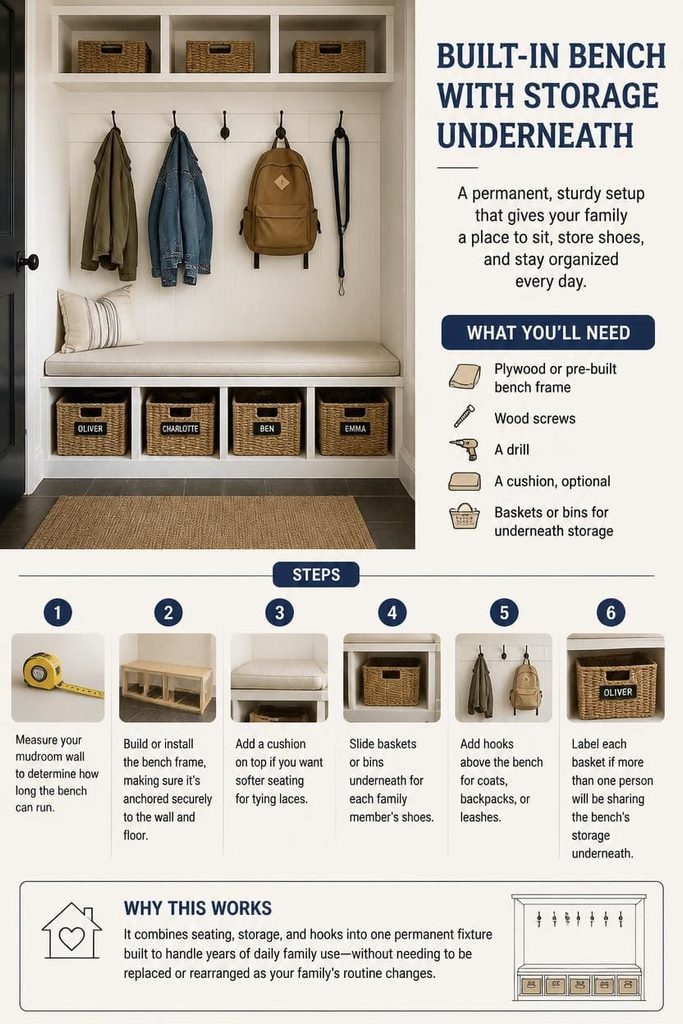
This idea fits you if you’re renovating or building your mudroom from scratch and want a permanent, sturdy setup. A built-in bench gives your family a place to sit while pulling on boots, with storage tucked underneath instead of scattered across the floor.
What you’ll need:
- Plywood or pre-built bench frame
- Wood screws
- A drill
- A cushion, optional
- Baskets or bins for underneath storage
Steps:
- Measure your mudroom wall to determine how long the bench can run.
- Build or install the bench frame, making sure it’s anchored securely to the wall and floor.
- Add a cushion on top if you want softer seating for tying laces.
- Slide baskets or bins underneath for each family member’s shoes.
- Add hooks above the bench for coats, backpacks, or leashes.
- Label each basket if more than one person will be sharing the bench’s storage underneath.
This works because it combines seating, storage, and hooks into one permanent fixture built to handle years of daily family use, without needing to be replaced or rearranged as your family’s routine changes.
A Wall of Hooks and Cubbies for Wet Gear
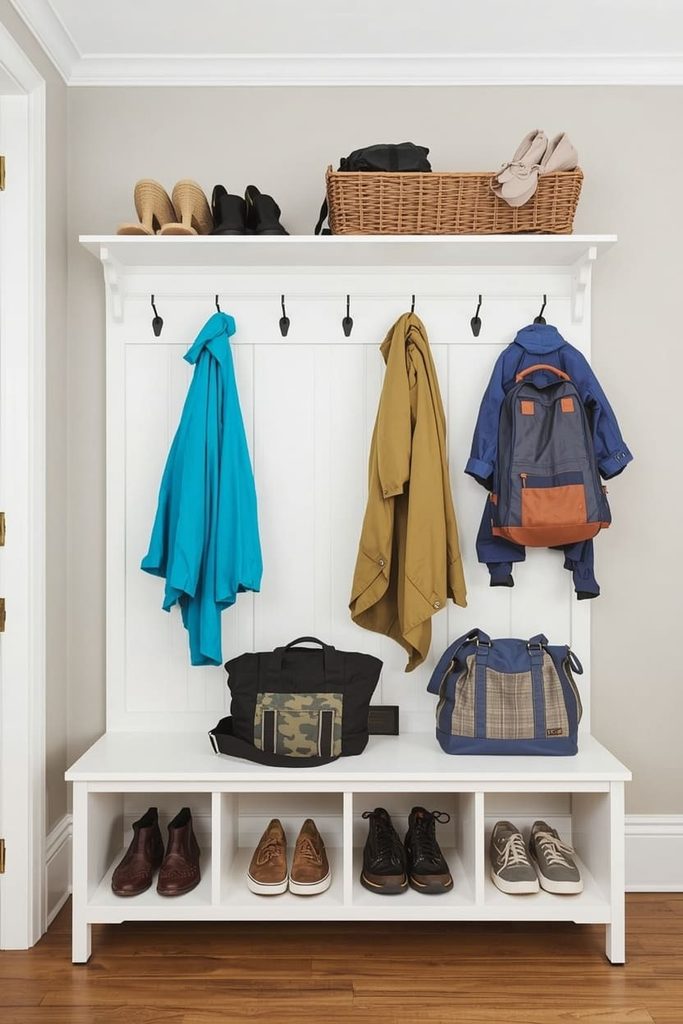
This idea works well if your mudroom handles more than shoes, like wet coats, umbrellas, and sports bags. A full wall system organizes everything in one place instead of scattering gear across chairs, counters, and the floor.
What you’ll need:
- A wall-mounted cubby and hook system
- A drill
- A level
- Wall anchors
Steps:
- Measure your available wall space, from floor to a comfortable reaching height.
- Mount cubbies near the bottom for shoes, since they’re heavier and easier to slide in low.
- Install hooks above the cubbies for coats, bags, and umbrellas.
- Use a level to keep the whole system straight across the wall.
- Assign zones by family member so everyone knows exactly where their gear belongs.
- Add a small shelf up top for items like sunscreen, bug spray, or other grab-and-go essentials.
This works because it handles your family’s full mudroom load, not just shoes, keeping everything organized in one connected system instead of scattered across counters, chairs, and floors.
A Rotating Seasonal Storage Bin System
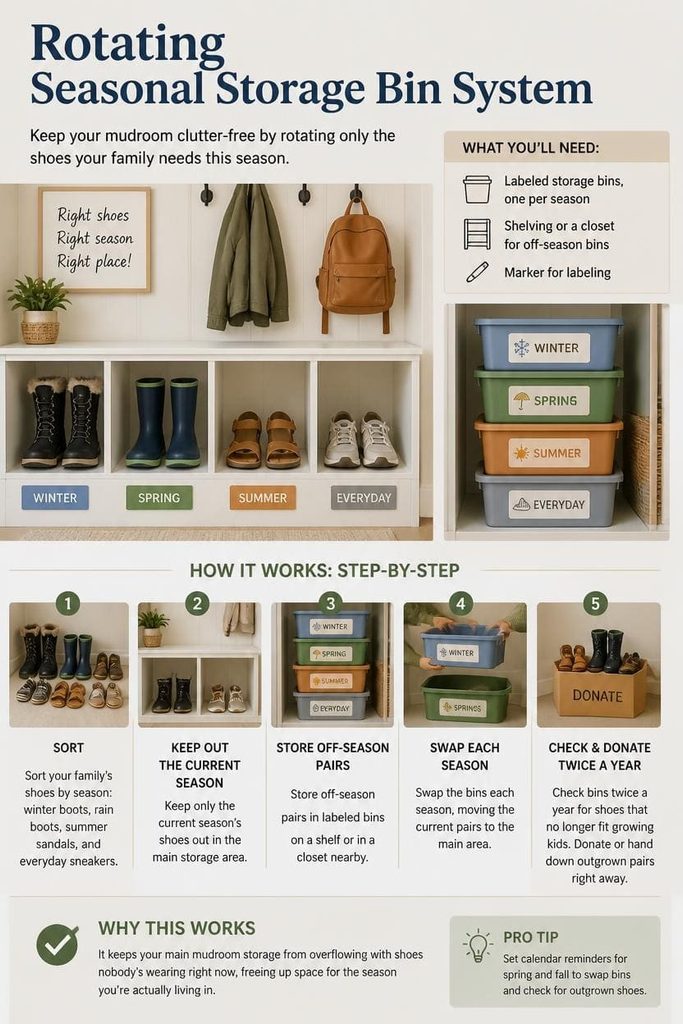
This idea suits you if your mudroom needs to handle very different gear depending on the season, like snow boots in winter and rain boots in spring. A rotating bin system keeps only the current season’s shoes accessible, so the space never feels overloaded with pairs nobody’s wearing.
What you’ll need:
- Labeled storage bins, one per season
- Shelving or a closet for off-season bins
- A marker for labeling
Steps:
- Sort your family’s shoes by season: winter boots, rain boots, summer sandals, and everyday sneakers.
- Keep only the current season’s shoes out in the main storage area.
- Store off-season pairs in labeled bins on a shelf or in a closet nearby.
- Swap the bins each season, moving the current pairs to the main area.
- Check bins twice a year for shoes that no longer fit growing kids.
- Donate or hand down outgrown pairs right away instead of letting them take up bin space.
This works because it keeps your main mudroom storage from overflowing with shoes nobody’s wearing right now, freeing up space for the season you’re actually living in.
How to Plan a Mudroom Shoe Storage System for Your Whole Family
The right plan starts with counting people, not just shoes. Each family member needs a defined spot, whether that’s a cubby, a locker, or a labeled bin, so nobody’s gear ends up competing for the same space.
Walk through your mudroom and note the natural flow: where people enter, where they sit to remove shoes, and where wet gear needs to dry. Build your storage system around that existing path instead of fighting against it, since a system that ignores how people actually move rarely gets used consistently.
Think about growth too. Kids outgrow shoes and gear quickly, so choose adjustable storage, like open cubbies or bins, rather than fixed slots sized for today’s shoe count. A system that can expand saves you from a full rebuild in just a year or two.
Finally, plan for durability from the start. A mudroom sees daily wear from mud, snow, and moisture, so choose materials that can handle water and scrubbing without falling apart. Cutting corners on materials here almost always costs more in repairs down the road.
Mudroom Shoe Storage Mistakes to Avoid
The biggest mistake is designing the space for shoes alone. Mudrooms handle coats, bags, sports gear, and more, so a system built only for shoes gets overwhelmed fast once real family life fills in the gaps.
Another common mistake is skipping a mud-containment zone entirely. Without a boot tray or mat, water and mud spread across the floor and eventually into the rest of the house, undoing all the organizing work you just did.
People also often build a system sized for their current family, not their growing one. A mudroom locker system with no room to add a section becomes a problem the moment a new baby or a move-in relative joins the household.
Lastly, choosing materials that can’t handle moisture is a costly mistake. Untreated wood or fabric-covered benches wear out fast in a room that deals with wet boots daily, often needing replacement within just a year or two.
How to Keep a Mudroom Clean During Wet and Muddy Seasons
The simplest habit is a daily wipe-down of trays and mats. Mud and water build up fast, and a quick daily pass keeps it from tracking further into the house, especially during the muddiest stretches of the year.
Set a house rule that shoes come off at the door, every time, no exceptions. This single habit does more to keep a mudroom clean than any storage system alone, no matter how well it’s built.
Rotate rugs or mats more often during wet months. A mat that works fine in summer often needs washing weekly once snow and slush become part of daily life, so keep a spare on hand to swap in.
Finally, do a deeper clean monthly, wiping down cubbies, benches, and hooks. Mud and moisture can hide in corners and seams, so a monthly check keeps the whole system smelling and looking fresh instead of quietly wearing down.
Frequently Asked Questions
What’s the best flooring for a mudroom with muddy shoes? Tile, sealed concrete, or vinyl flooring all handle mud and moisture better than carpet or hardwood. These surfaces wipe clean quickly and resist water damage over time. Pair any of these with a rug or mat near the entry for extra protection, especially in a household with kids or pets tracking things in daily.
How do I organize shoe storage for a big family in a mudroom? A locker-style cubby system with one section per person works best for larger families. Label each section clearly so everyone, including kids, knows exactly where their shoes belong. Add extra sections for growth or frequent guests so the system doesn’t feel cramped later, especially if your family is likely to grow.
How do I stop mud and water from spreading through my house? Place a boot scraper outside the door and a boot tray or rubber mat just inside it. This two-step system catches most mud and water before it ever reaches the rest of your home. Empty and clean the tray regularly, especially during wet seasons, so it never becomes a source of tracked-in mess itself.
What’s the best mudroom bench for shoe storage? A built-in or sturdy freestanding bench with cubbies underneath works best for daily family use. Look for water-resistant materials, since mudroom benches deal with wet boots often. A cushion on top adds comfort without sacrificing the storage underneath, and washable fabric makes upkeep much easier over time.
How do I keep a mudroom organized with kids? Assign each child a labeled cubby or bin at a height they can reach on their own. Keep the system simple, since kids are more likely to use storage that’s easy to understand. Do a quick weekly reset together so everyone stays in the habit of putting gear back, turning organization into a shared routine instead of a chore only you handle.

Sohel Rana is the writer, editor, publisher, and founder of The Tidy Porch. He is the man who is responsible for the craft (my wife created) being converted into a written piece. He also helps her wife (Sumona) by capturing videos of each craft. In short, he brings each craft created by her wife in front of you by transforming it into an article and a video.
