
Last winter, I opened my front door for a surprise guest and nearly fell over a pile of boots. Six pairs of shoes sat scattered across the mat.
My “welcome home” moment turned into a scramble to kick shoes into a closet before she stepped inside. I felt embarrassed in my own entryway, and that stung more than it should have.
That night, I decided enough was enough. I wanted a system that looked good and actually worked, day after day, not just for the one afternoon I set it up.
No bulky farmhouse baskets. No cluttered shoe piles by the door. Just clean, modern storage that fit my small space and matched my style.
Here are 5 complete ideas you can follow from start to finish, plus the products that make each one easy to set up this weekend.
Top 5 Products for a Modern Entryway
SONGMICS Slim Shoe Bench — This narrow bench holds up to nine pairs of shoes and gives you a spot to sit while you tie your laces.
Wall-Mounted Floating Shoe Shelf — This shelf mounts straight to the wall, so your shoes float above the floor with zero footprint.
Matte Black Shoe Cabinet with Doors — This cabinet hides your shoes completely behind sleek doors, keeping your entryway looking tidy at all times.
Vertical Shoe Storage Tower — This tall, narrow tower stacks shoes upward instead of outward, perfect for tight hallways and small apartments.
Storage Ottoman with Shoe Tray — This cushioned ottoman opens up to reveal hidden shoe storage inside, doubling as extra seating by the door.
A Slim Bench That Hides Shoes Underneath
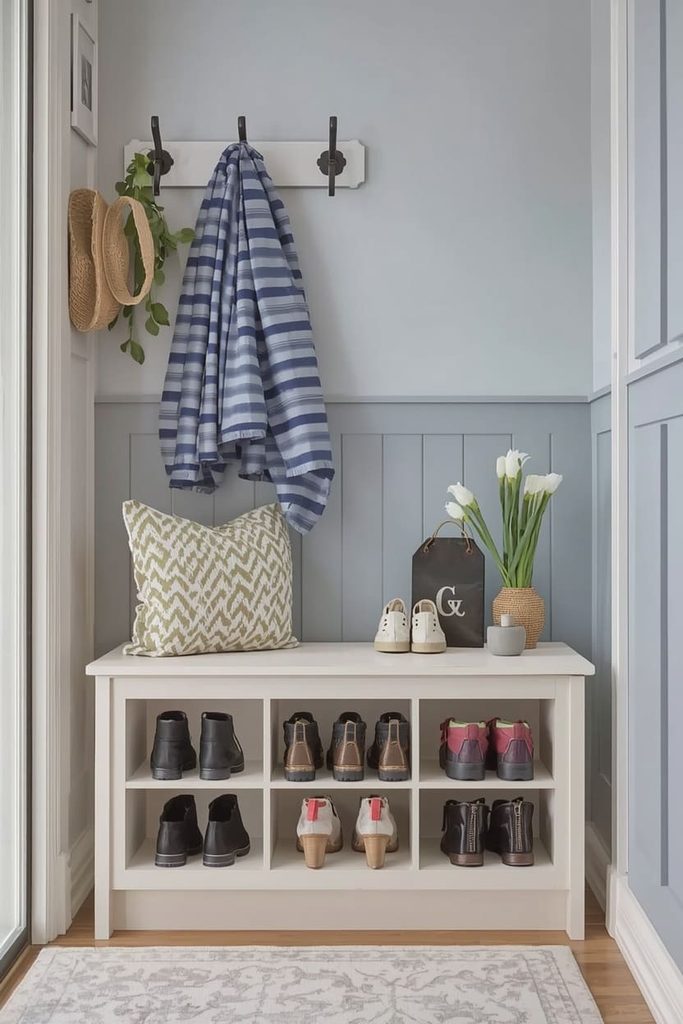
This idea works best if your entryway is narrow and you need a spot to sit down. A slim bench gives you seating and closed storage in one small footprint, which is exactly what tight spaces need.
What you’ll need:
- A slim shoe storage bench (18-24 inches deep)
- A tape measure
- Wall anchors, if the bench needs securing
- A soft cushion or throw pillow, optional
Steps:
- Measure your entryway width first. Leave at least 24 inches of walking space beside the bench, so nobody has to squeeze past it.
- Pick a bench with a solid seat and closed cubbies, not open shelves. Open shelves show clutter the moment you toss a shoe in sideways.
- Place the bench against the wall closest to your door, ideally within arm’s reach of where you sit to remove shoes.
- Secure it to the wall with anchors if you have kids or pets who might climb or lean on it.
- Fill the cubbies with your most-used shoes only. Rotate seasonal pairs, like winter boots or sandals, into a hallway closet.
- Add a small cushion on top if the seat feels hard. This makes the bench more inviting to actually use.
This works because a closed bench hides mess while still giving you a place to sit and put shoes on. Guests only see a clean bench, never the shoes tucked inside, and you get a comfortable seat every time you come home.
A Floating Shelf That Uses Zero Floor Space
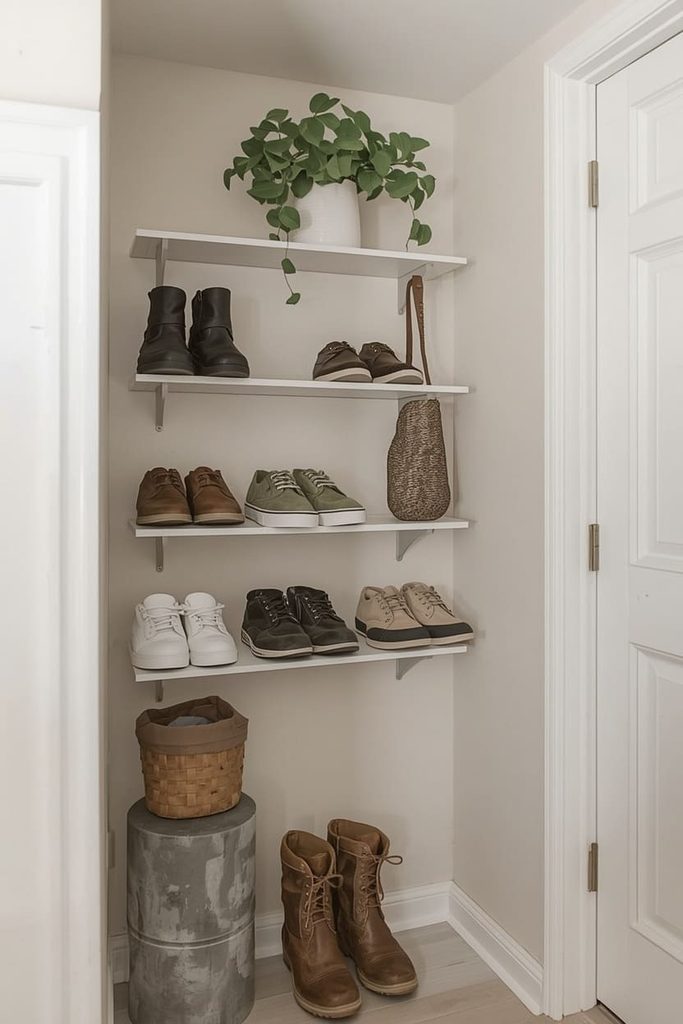
This idea is perfect if your entryway is tiny and every inch of floor matters. A floating shelf keeps shoes off the ground completely, which makes even a narrow hallway feel open.
What you’ll need:
- A wall-mounted floating shoe shelf
- A stud finder
- A drill
- A level
- A pencil for marking
Steps:
- Find a wall stud using your stud finder before you drill anything. This keeps the shelf sturdy under the weight of several pairs.
- Mark your shelf height with a pencil. Most people mount shelves 12-18 inches off the floor, low enough to reach but high enough to sweep underneath.
- Use a level to draw a straight guideline across the wall. A crooked shelf stands out instantly in a small space.
- Drill and mount the shelf bracket directly into the stud for a secure hold.
- Slide shoes onto the shelf with toes facing out for a neat, gallery-style look.
- Leave a small gap between pairs so the shelf doesn’t look overstuffed.
This works because nothing touches your floor. Your entryway feels bigger, and cleaning underneath takes seconds instead of minutes, so you’ll actually keep up with it.
A Closed Cabinet That Hides Everything
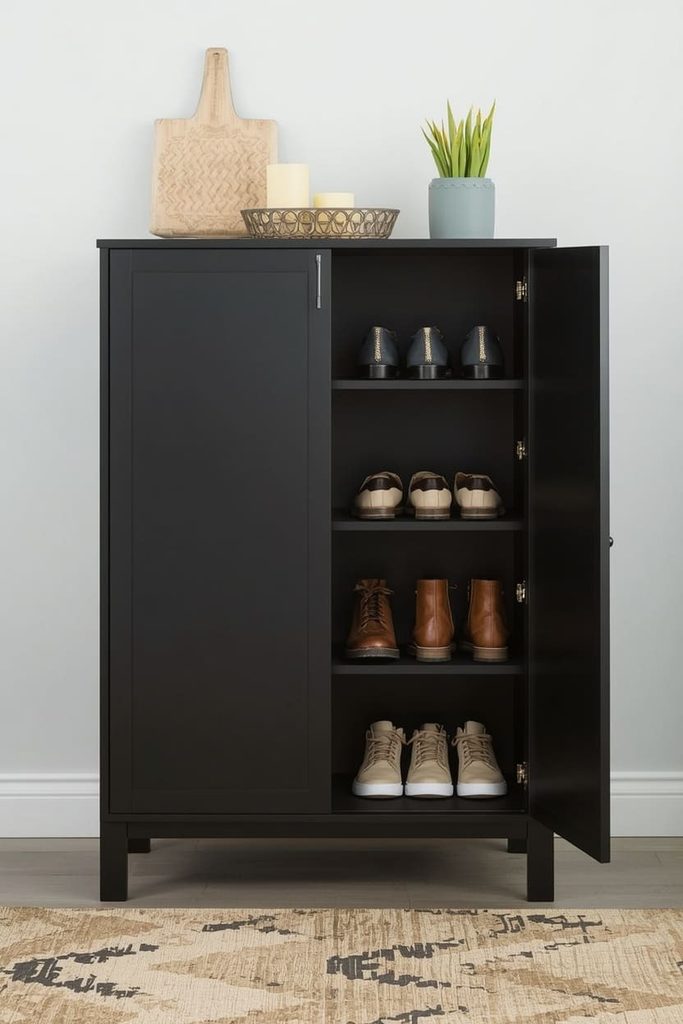
This idea suits you if you want zero visible clutter, ever, even on your busiest mornings. A closed cabinet keeps shoes completely out of sight behind solid doors.
What you’ll need:
- A matte black or white shoe cabinet
- A screwdriver, for assembly
- Furniture pads for the floor
- A small decorative tray for the top
Steps:
- Choose a cabinet width that matches your available wall space. Measure twice before buying, since returns on furniture can be a hassle.
- Assemble the cabinet following the included instructions, checking that each shelf sits level before moving on.
- Add furniture pads under the legs to protect your floor from scratches when the cabinet shifts.
- Sort shoes by how often you wear them. Put daily shoes on the bottom shelf, so you’re not bending or reaching too far.
- Close the doors fully after each use. Add a small tray, candle, or plant on top for a finished look.
- Wipe the exterior weekly with a soft cloth to keep the matte finish looking fresh.
This works because closed doors remove visual clutter instantly. Your entryway always looks finished, even when your actual shoe collection is a mess inside, and it holds up well over years of daily use.
A Vertical Tower for Tight Hallways
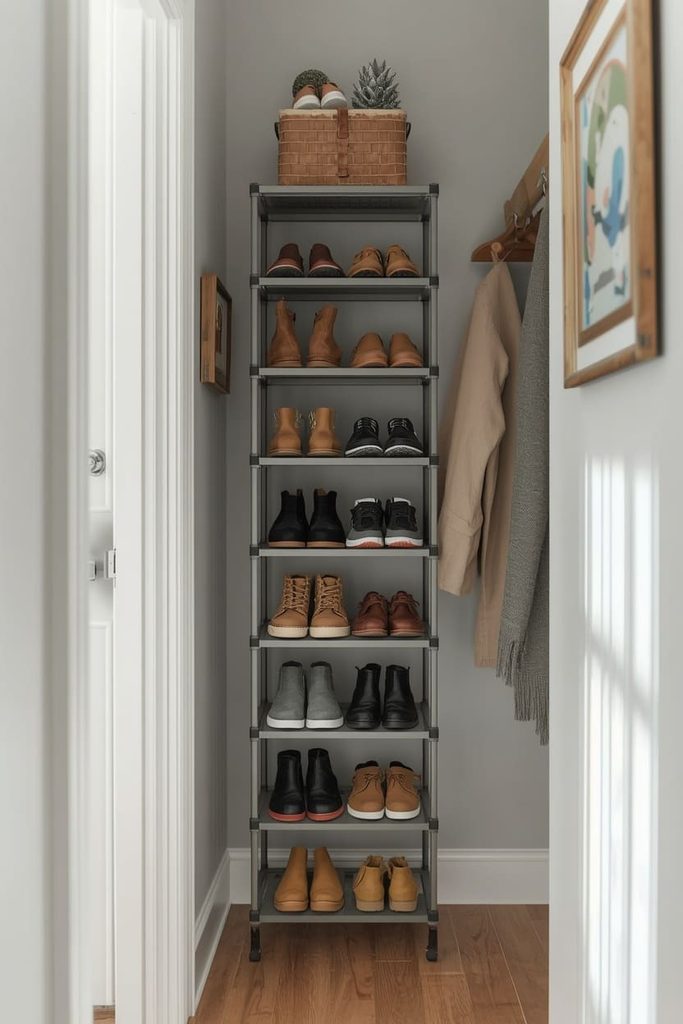
This idea fits you if your entryway is narrow and tall, like in many apartments and older homes. A vertical tower stacks storage up instead of spreading it out across the floor.
What you’ll need:
- A narrow vertical shoe tower
- A measuring tape
- Anti-tip wall straps
- A level
Steps:
- Measure the narrowest point in your entryway before shopping. Vertical towers often fit spaces as tight as 12 inches wide.
- Place the tower flush against a wall, away from the door swing, so it never gets bumped when the door opens.
- Attach anti-tip straps to the wall for safety, especially if you have kids or curious pets at home.
- Load shoes from the bottom up, placing heavier boots on the lowest shelf to keep the tower stable.
- Leave the top shelf open for shoes you grab most often, so you’re not digging through every level each morning.
- Check the straps every few months to make sure they’re still holding tight.
This works because it uses height, not width, to store more pairs. Small hallways stay walkable, open, and easy to move through, even during busy mornings when everyone leaves at once.
An Ottoman That Doubles as Seating
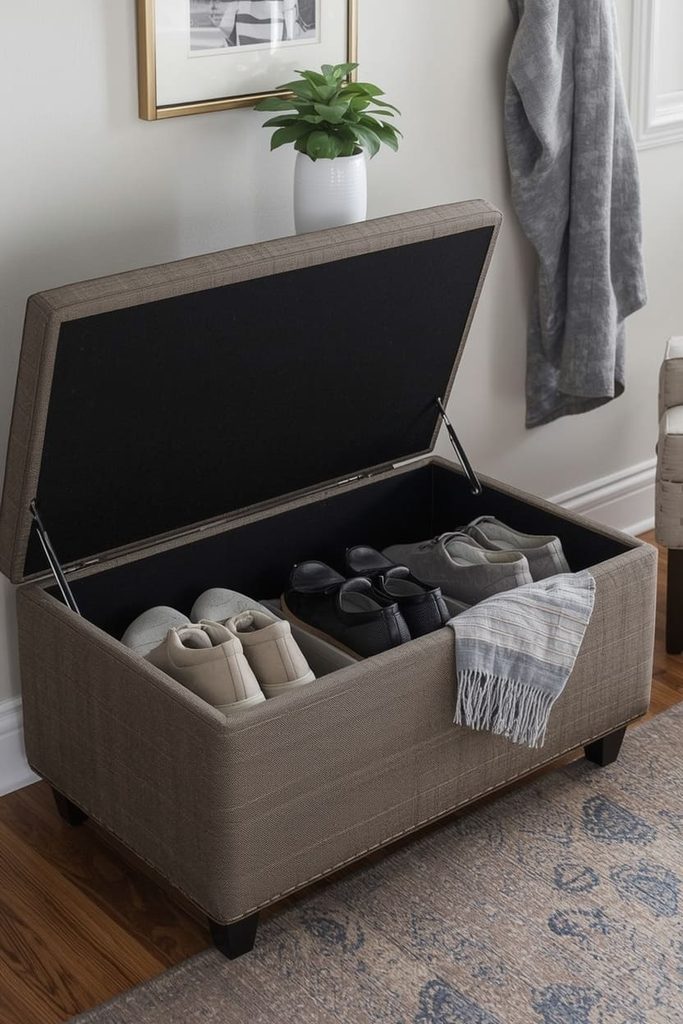
This idea works well if you want your storage to disappear into the room’s design completely. A storage ottoman hides shoes inside while doubling as a seat, side table, or footrest.
What you’ll need:
- A storage ottoman with a lift-top lid
- A small tray, for the top surface
- A soft cloth for cleaning
Steps:
- Choose an ottoman size that fits your entryway without blocking the door or a walking path.
- Place it against a wall or beside a console table, wherever people naturally pause to remove their shoes.
- Line the inside with a shoe tray to catch dirt and moisture before it touches the fabric.
- Store your most-used shoes inside, laid flat so they don’t crush each other when the lid closes.
- Top the ottoman with a tray, book, or small plant when it’s not being used as a seat.
- Vacuum the inside monthly to keep dirt and small pebbles from building up.
This works because it blends storage into your decor instead of standing out as a “shoe thing.” Nobody guesses shoes are hiding right underneath, and you get extra seating for guests as a bonus.
How to Choose the Right Shoe Storage for a Small Entryway
The right choice depends on your entryway’s shape, not just how many shoes you own. A narrow hallway needs vertical storage. A wider spot allows a bench, cabinet, or even an ottoman.
Start by measuring your space, both width and height, before you shop for anything. Write the numbers down on your phone. This one habit stops you from buying something too big, too bulky, or too small to be useful.
Next, think about how many pairs you actually wear each week. Most people only need daily storage for 4-6 pairs. Everything else, like snow boots or sandals, can rotate into a closet by season instead of sitting by the door year-round.
Finally, pick a finish that matches your existing decor. Matte black, warm wood tones, and soft white all fit most modern spaces without clashing against your walls or flooring.
Also think about how the piece will be cleaned. Fabric ottomans need more upkeep than a wipeable cabinet, especially if you live somewhere with rain or snow for half the year.
If your entryway sees a lot of wet boots, lean toward hard surfaces you can wipe down in seconds rather than fabric that soaks up moisture.
Modern Shoe Storage Mistakes to Avoid
The biggest mistake is buying open shelving for a small entryway. Open shelves look tidy in photos but turn messy fast once real shoes, in real sizes and colors, land on them.
Another common mistake is ignoring foot traffic space. If your storage blocks the door swing or a main walking path, you’ll trip over it daily, and eventually you’ll stop using it altogether.
People also often try to store too many shoes near the door. Keeping only your weekly rotation nearby keeps the space from filling up again within just a few days.
Lastly, skipping measurements before buying leads to pieces that don’t fit the space or the wall. Always measure twice and write it down before you add anything to your cart.
One more mistake worth mentioning: choosing style over function. A gorgeous piece that only holds three pairs won’t solve your problem if your family owns fifteen. Balance looks with actual capacity before you commit to a purchase.
How to Keep Your Entryway Shoe Storage Looking Neat
The simplest way to stay neat is a nightly two-minute reset. Put shoes away the moment you walk in, before you set down your bag or keys anywhere else.
Set a firm limit on how many shoes live by the door at once. A hard cap forces you to rotate seasonal pairs into a closet regularly instead of letting them pile up.
Wipe your storage piece weekly with a damp cloth. Dust and dirt build up fast near an entrance, especially during wet or muddy months of the year.
Add a small tray or mat under muddy boots year-round. This keeps your storage piece clean and protects the floor underneath from scuffs and water stains.
Finally, do a seasonal swap every few months. Pull out the boots or sandals you haven’t touched in weeks and move them to a closet. This keeps your entryway storage from ever feeling crowded, no matter how many shoes your household owns.
Frequently Asked Questions
How many pairs of shoes should entryway storage hold? Most homes only need space for 4-6 pairs near the door. These should be the shoes you wear weekly, like sneakers or work shoes. Store everything else in a closet and rotate by season as the weather changes.
What’s the best shoe storage for a small apartment entrance? A wall-mounted floating shelf or a vertical tower works best in tight apartment entrances. Both use minimal floor space while still holding several pairs of shoes. Choose based on whether your space is wider or taller.
Can shoe storage really look modern instead of messy? Yes, closed storage like cabinets and benches keeps shoes hidden from view completely. A modern look comes from clean lines and closed doors, not open baskets or bins. Matte finishes and simple shapes fit most modern entryways with ease.
Should I mount shoe storage to the wall? Mounting is smart if you have kids, pets, or a narrow space with limited floor room. Wall anchors prevent tipping and free up floor space below the shelf. Always find a wall stud for heavier pieces like shelves or towers.
How do I stop shoes from piling up again after organizing? Set a strict pair limit for your entryway storage, and stick to it. When the space is full, rotate a pair into your closet before adding a new one. This one small habit keeps the space from filling up all over again.

Sohel Rana is the writer, editor, publisher, and founder of The Tidy Porch. He is the man who is responsible for the craft (my wife created) being converted into a written piece. He also helps her wife (Sumona) by capturing videos of each craft. In short, he brings each craft created by her wife in front of you by transforming it into an article and a video.
