
Every evening, my hallway told the same story. My husband kicked off his boots by the garage door. My son dropped his sneakers halfway to the kitchen. By bedtime, I was tripping over shoes in the dark on my way to check on the kids.
I didn’t want to block the hallway with furniture, since we still needed to walk through it every single day. I needed a system that ran along the wall, not one that ate up the walking path.
Here are 5 complete ideas you can follow from start to finish, plus the products that make each one easy to set up this weekend.
Top 5 Products for Hallway Shoe Storage
Long Shoe Bench with Hooks — This bench stretches along a wall, giving you seating, shoe cubbies, and hooks for coats or bags in one piece.
Wall-Mounted Shoe Rack for a Long Wall — This rack mounts flat against the wall and stretches to fit a longer run of hallway space.
Shoe Cubby Organizer — This organizer gives each family member their own labeled cubby, ending arguments over whose shoes are whose.
Boot Tray for Hallway Runners — This tray catches dirt and water under boots, protecting your hallway runner or flooring underneath.
Slim Corridor Shoe Rack — This narrow rack fits along a tight corridor wall without sticking out far enough to block foot traffic.
A Garage-to-Kitchen Hallway That Stops the Shoe Trail
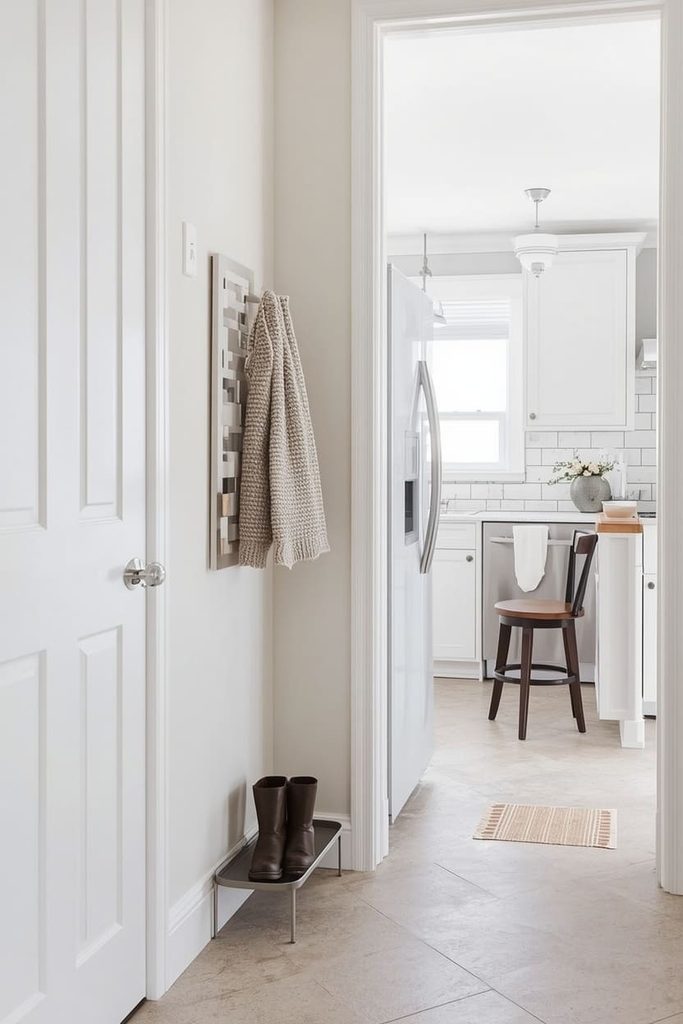
This idea works best if your hallway connects a garage or side door straight to your kitchen. A shoe rack placed right at the garage entry stops shoes before they travel any further into the house.
What you’ll need:
- A slim corridor shoe rack
- A tape measure
- A boot tray, for wet or muddy shoes
Steps:
- Measure the wall space just inside your garage door before you buy anything.
- Place the rack flush against the wall, close enough to the door that shoes go directly onto it.
- Set a boot tray beside the rack for wet or muddy pairs during rain or snow.
- Ask everyone in the house to remove shoes at this exact spot, not further down the hallway.
- Empty the boot tray weekly to keep water from sitting too long.
- Add a small hook nearby for a reusable bag, so wet or dirty shoes can go straight into it instead of the floor.
This works because it catches shoes at the source, right where people enter, instead of letting them travel deeper into your home. Once the habit sticks, shoes stop appearing anywhere else in the hallway at all.
A Long Bench for a Busy Family Hallway
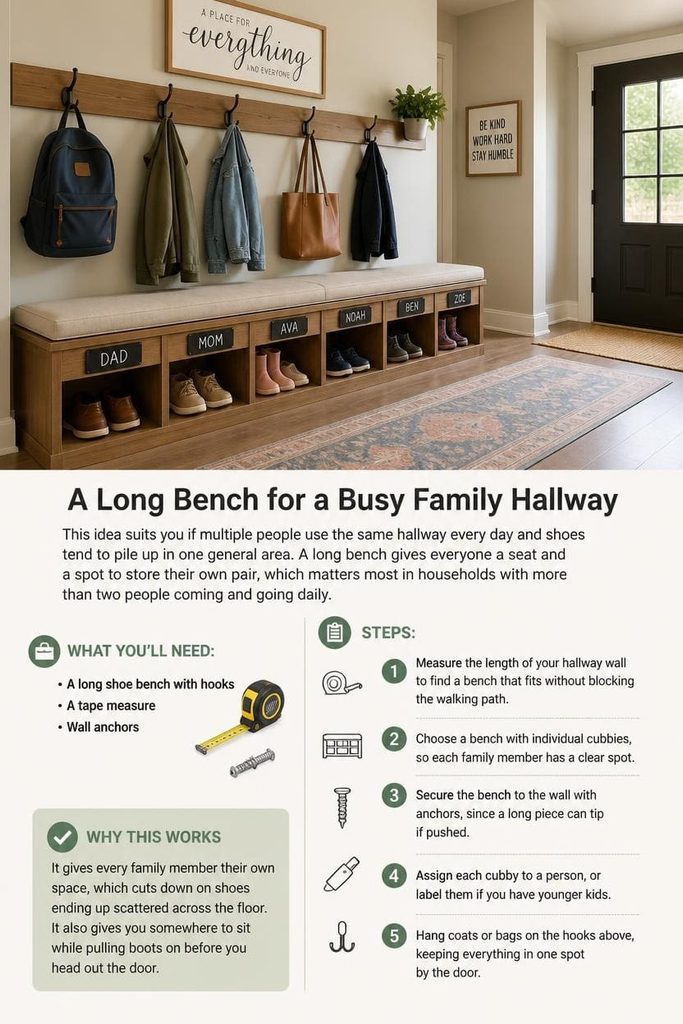
This idea suits you if multiple people use the same hallway every day and shoes tend to pile up in one general area. A long bench gives everyone a seat and a spot to store their own pair, which matters most in households with more than two people coming and going daily.
What you’ll need:
- A long shoe bench with hooks
- A tape measure
- Wall anchors
Steps:
- Measure the length of your hallway wall to find a bench that fits without blocking the walking path.
- Choose a bench with individual cubbies, so each family member has a clear spot.
- Secure the bench to the wall with anchors, since a long piece can tip if pushed.
- Assign each cubby to a person, or label them if you have younger kids.
- Hang coats or bags on the hooks above, keeping everything in one spot by the door.
This works because it gives every family member their own space, which cuts down on shoes ending up scattered across the floor. It also gives you somewhere to sit while pulling boots on before you head out the door.
A Wall-Mounted Rack for a Long, Narrow Corridor
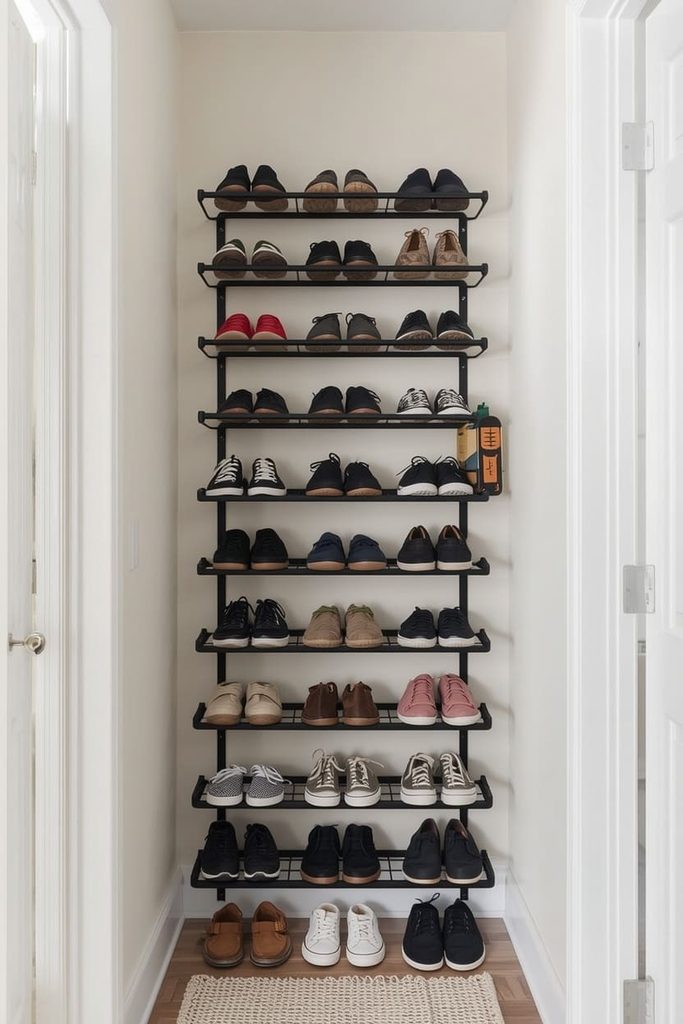
This idea fits you if your hallway is long but too narrow for a bench or bulky furniture. A wall-mounted rack uses the length of the wall instead of the width of the floor.
What you’ll need:
- A wall-mounted shoe rack, sized for a long wall
- A stud finder
- A drill
- A level
Steps:
- Find wall studs along the length of your hallway using a stud finder.
- Mark your rack height, usually 10-14 inches off the floor for easy shoe placement.
- Use a level to keep the rack straight across its full length.
- Drill and mount the rack into the studs you marked.
- Line shoes up along the rack, spacing them evenly so the hallway stays easy to walk through.
This works because it stretches storage across the wall instead of the floor, keeping the full width of the corridor clear for walking. It also spreads shoes out evenly, so one small section never gets overloaded.
Labeled Cubbies for Multiple Family Members
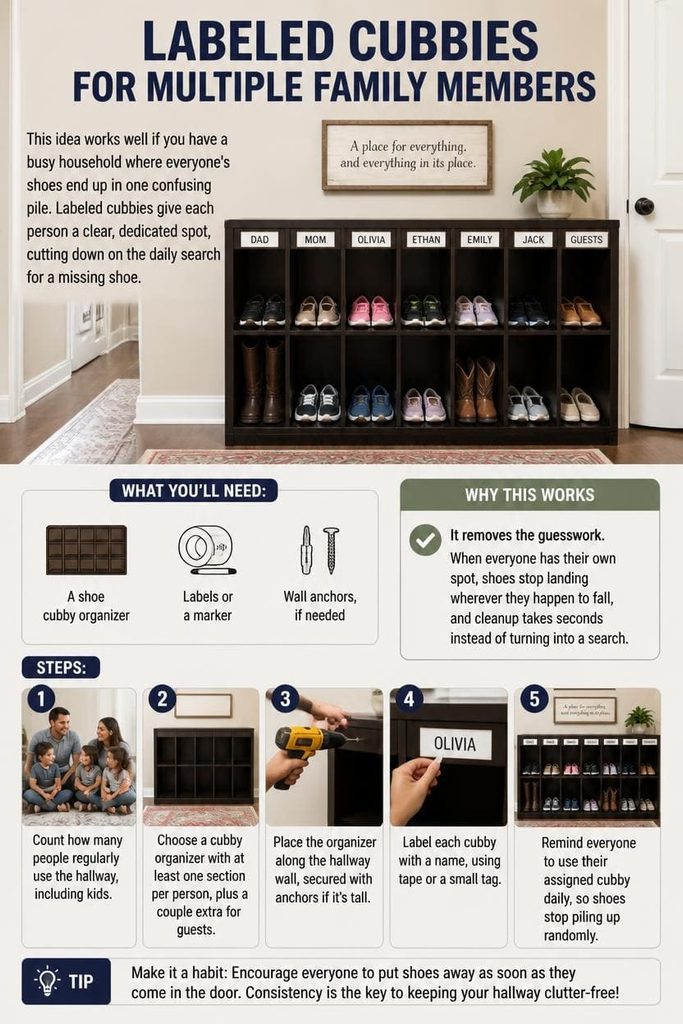
This idea works well if you have a busy household where everyone’s shoes end up in one confusing pile. Labeled cubbies give each person a clear, dedicated spot, cutting down on the daily search for a missing shoe.
What you’ll need:
- A shoe cubby organizer
- Labels or a marker
- Wall anchors, if needed
Steps:
- Count how many people regularly use the hallway, including kids.
- Choose a cubby organizer with at least one section per person, plus a couple extra for guests.
- Place the organizer along the hallway wall, secured with anchors if it’s tall.
- Label each cubby with a name, using tape or a small tag.
- Remind everyone to use their assigned cubby daily, so shoes stop piling up randomly.
This works because it removes the guesswork. When everyone has their own spot, shoes stop landing wherever they happen to fall, and cleanup takes seconds instead of turning into a search.
A Boot Tray System for Wet or Muddy Hallways
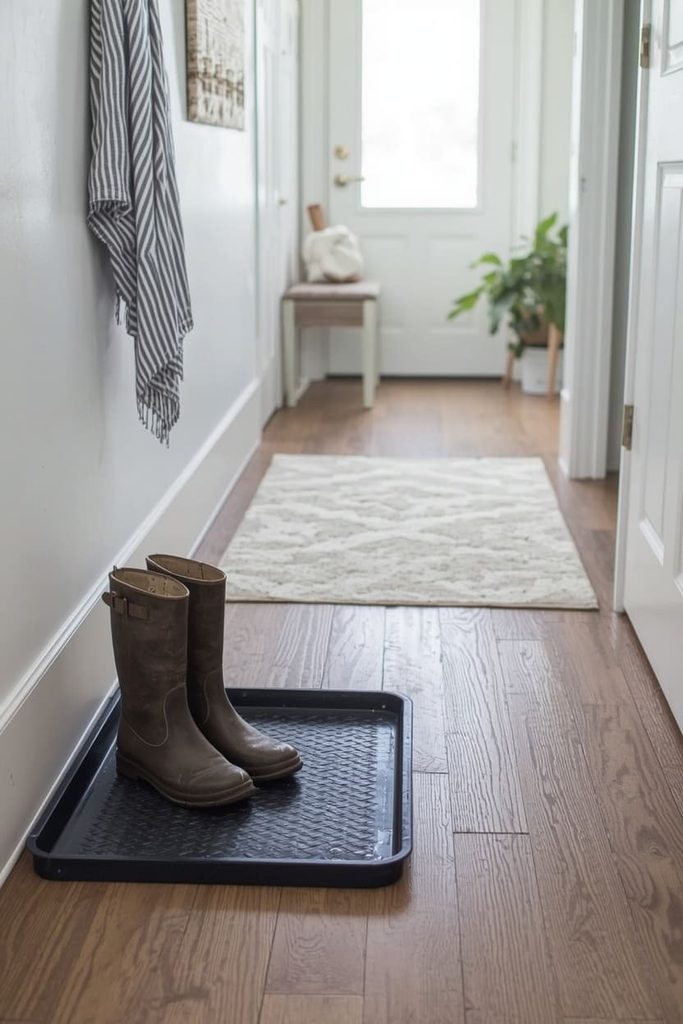
This idea suits you if your hallway sees a lot of rain, snow, or mud tracked in throughout the year. A boot tray protects your floor while keeping shoes contained in one spot.
What you’ll need:
- A boot tray sized for your hallway width
- A hallway runner, optional
- A small towel, for quick wipe-ups
Steps:
- Measure your hallway width to find a tray that fits without blocking the path.
- Place the tray just inside the door where wet shoes first enter.
- Add a hallway runner in front of the tray to catch any extra drips.
- Keep a small towel nearby for quick wipe-downs after heavy rain or snow.
- Empty and dry the tray every few days to prevent water buildup.
This works because it contains moisture in one place, protecting your flooring and keeping the rest of the hallway dry and safe to walk on. It also makes cleanup faster, since you’re wiping one tray instead of the whole floor.
How to Plan Shoe Storage Along a Long Hallway
The right plan starts with measuring the full length of your hallway, not just one spot near the door. A long hallway often has more usable wall space than people realize, especially once you account for the stretches between doorways or light switches.
Walk the hallway and note where people naturally stop to remove shoes. This is usually right inside a door, not in the middle of the corridor. Place your main storage piece at that exact spot, since fighting against natural habits rarely works long term.
Next, decide if one long piece or several smaller ones fits better. A single long bench works for open walls, while smaller racks work better if you have doors, outlets, or artwork breaking up the space. Sketch out the wall on paper first, marking any obstacles, so you know exactly what will fit before you buy anything.
Finally, always leave at least 24-30 inches of clear walking space down the center of the hallway. This keeps the corridor safe and functional, even with storage running along one side. Test this by walking through with your arms full, the way you would carrying groceries or laundry, to make sure nothing gets in the way.
Hallway Shoe Storage Mistakes to Avoid
The biggest mistake is placing storage too far from where people actually enter. If the rack sits halfway down the hallway, shoes will keep piling up closer to the door instead, no matter how nice the rack looks.
Another common mistake is choosing furniture that’s too deep for the space. A hallway needs shallow, wall-hugging pieces, not deep benches or cabinets meant for a wider room. Anything deeper than about 12 inches tends to eat into the walking path more than people expect once it’s actually installed.
People also often forget to plan for multiple family members. A single small rack quickly overflows in a household with kids, guests, or more than two adults using the same hallway.
Lastly, skipping wall anchors on tall or long pieces is risky in a busy corridor. A rack that tips over in a high-traffic hallway becomes a hazard, not a solution.
One more mistake is choosing a single style of storage for a household with very different needs. Kids may need low hooks they can reach on their own, while adults might prefer a taller rack. Mixing storage heights along the same wall often works better than forcing everyone to use one setup.
How to Keep a Busy Family Hallway Walkable
The simplest rule is a strict no-shoes-past-this-point policy. Everyone removes shoes right at the storage spot, never further down the hallway, no matter how tired or rushed they are on their way in.
Set a weekly reset where everyone claims stray shoes and puts them back in their assigned spot. This catches anything that slipped through during a busy week, before it turns into a bigger mess.
Keep a small basket nearby for shoes that don’t have an assigned spot yet, like a new pair or a guest’s shoes. Sort the basket every few days so it never becomes a permanent pile.
Finally, walk the hallway yourself each night before bed. A quick nightly check keeps the path clear and prevents anyone from tripping in the dark.
Consider adding a small nightlight near your storage area if the hallway gets dark at night. Even the best organizing system can’t prevent a stumble if nobody can see where the shoes are supposed to go.
Frequently Asked Questions
What’s the best shoe storage for a hallway with no closet? A wall-mounted rack or a long bench with cubbies works best when there’s no closet nearby. Both use wall space instead of relying on a closet you don’t have. Choose based on whether your hallway is wide enough for a bench or better suited to a slim wall rack, and measure before deciding either way.
How do I stop shoes from piling up in a busy hallway? Place storage right at the entry point, not further down the corridor. Assign each family member their own spot, like a labeled cubby or hook. This removes the confusion that usually leads to shoes ending up in random piles, since everyone knows exactly where their pair belongs.
Can I add shoe storage without blocking the walking path? Yes, wall-mounted racks and slim benches keep the floor clear while still holding several pairs. Always leave at least 24-30 inches of open space down the center of the hallway. This keeps the corridor safe, even with storage running along one wall, so nobody has to squeeze past furniture daily.
What’s the best hallway shoe storage for a big family? A long bench with individual cubbies or a cubby organizer with a section per person works best for larger households. Labeling each spot cuts down on confusion and mixed-up shoes. Add a few extra slots for guests so the system doesn’t break down when visitors come by, especially during holidays or gatherings.
How do I protect my hallway floor from wet or muddy shoes? A boot tray placed right at the entry point catches water and mud before it spreads. Pair it with a hallway runner for extra protection on wood or tile floors. Empty and dry the tray every few days to prevent water damage over time, especially in homes with hardwood underneath.

Sohel Rana is the writer, editor, publisher, and founder of The Tidy Porch. He is the man who is responsible for the craft (my wife created) being converted into a written piece. He also helps her wife (Sumona) by capturing videos of each craft. In short, he brings each craft created by her wife in front of you by transforming it into an article and a video.
